Why “basic office cleaning” isn’t good enough for medical and commercial facilities
Basic office checklists vs. real-world facilities
Most cleaning companies show up with the same generic “office” checklist: empty trash, vacuum, wipe a few surfaces, clean restrooms. That might be fine for a basic office. It is not enough for a medical office building, outpatient center, surgery center, doctor’s office, or professional building where patients are walking in every day and judging your standards the second they sit down.
Why zones matter more than tasks
In these environments, the checklist has to start with zones, not random tasks. A lobby or waiting room with sick and anxious people is not the same as a back office. A restroom used by patients and families is not the same as a staff lounge. A professional nightly program looks at each area—waiting rooms, corridors, exam-adjacent spaces, staff areas, restrooms, and administrative offices—and sets clear expectations for how they are cleaned, how often, and with what level of detail.
Waiting rooms and restrooms: your real front line
From a patient’s point of view, the waiting room, front desk, and restrooms are the real front line. Smudged glass, sticky armrests, dusty vents, and dirty floors don’t just look bad; they send the message that details are being missed. A proper nightly checklist makes sure reception counters, chairs, door handles, elevator buttons, tables, and floors are consistently cleaned and disinfected, not hit-or-miss depending on which cleaner happens to be on that night. Restrooms get the same treatment: full fixture cleaning, touchpoint disinfection, reliable stocking, and odor control, every night, not “when we have time.”
Near-clinical spaces and staff areas
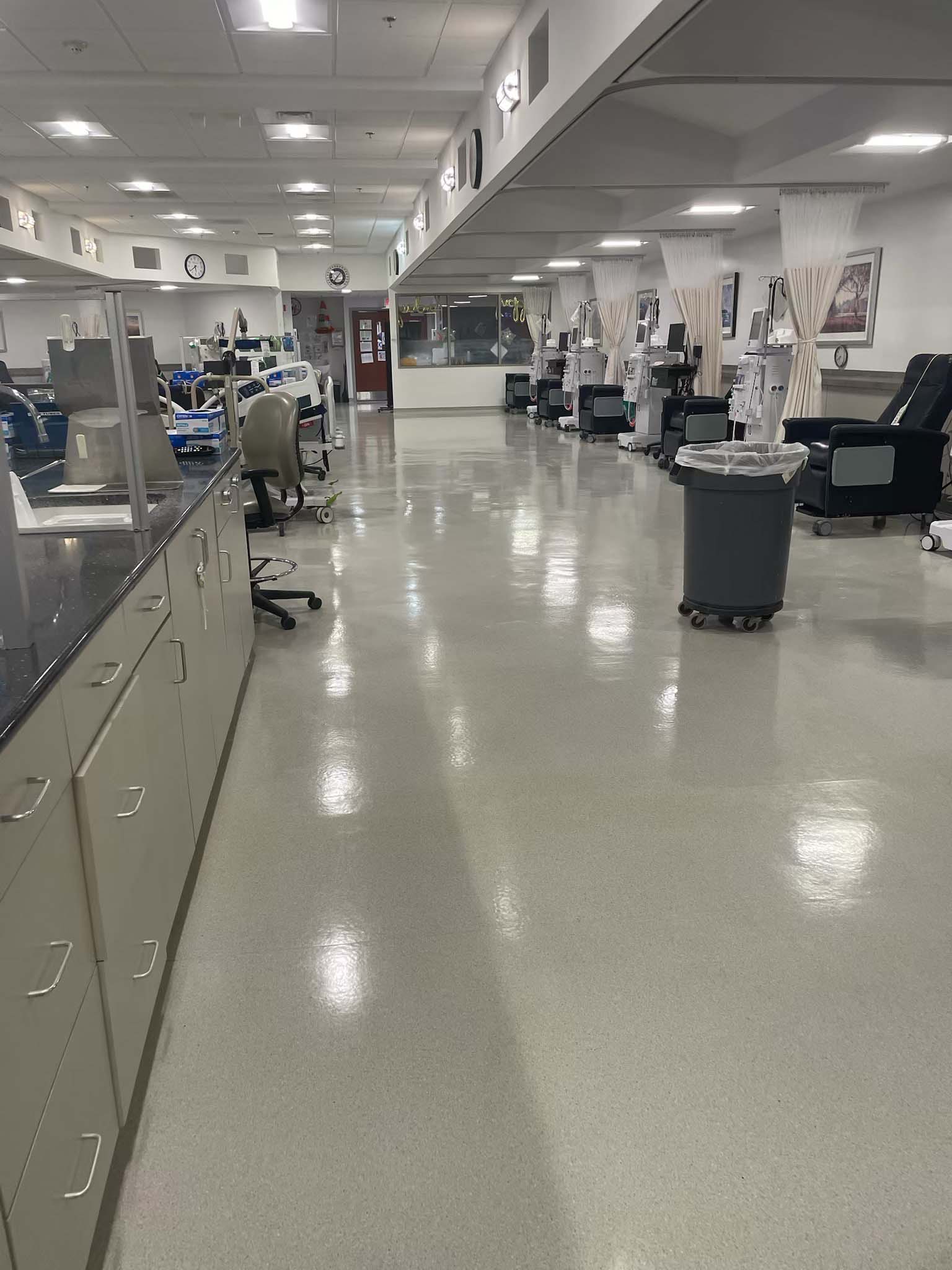
Near clinical areas, the checklist has to respect the line between clinical duties and janitorial duties. Clinical staff handle in-between-patient turnover and anything tied directly to patient care. A professional contractor handles the nightly reset: floors, non-clinical touchpoints, sinks and splash zones, trash to your standards, and overall appearance. The goal is simple: when staff walk in the next morning, they are not fighting yesterday’s mess before they even see the first patient. Staff lounges, nurse stations, and breakrooms are another common blind spot. They’re “just for staff,” so standards slip. A real checklist doesn’t ignore them. Tables, counters, appliances, sinks, and floors are kept under control so your own team isn’t working in a space that feels like an afterthought—and so those areas don’t become another route for germs to travel back into patient-facing zones.
The forgotten areas that tell the truth
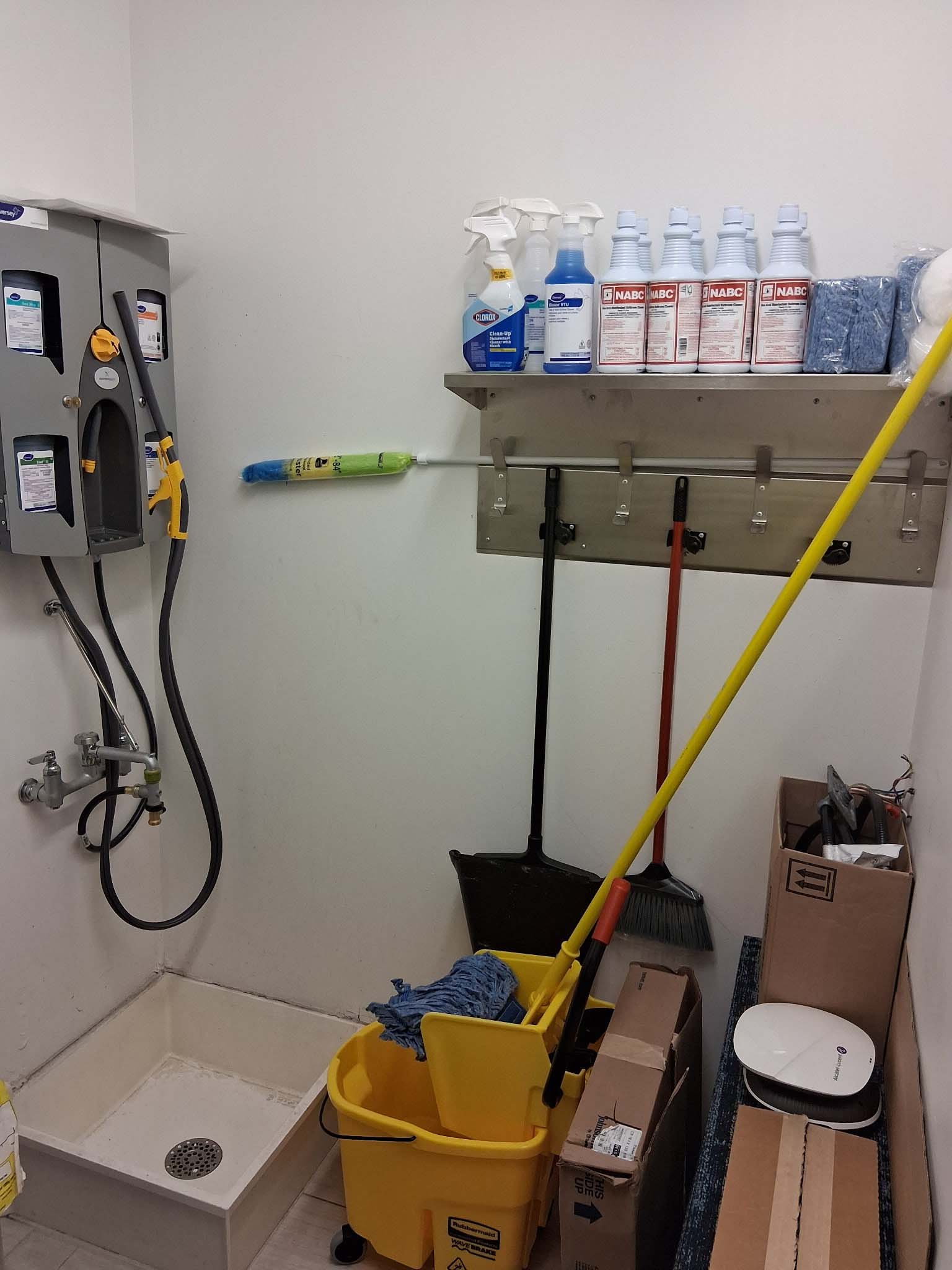
At the building level, a serious nightly program also accounts for the less glamorous areas: stairwells, elevators, back corridors, and storage and janitor closets. These spaces affect safety, inspections, and overall perception. If your current spec basically says “clean offices and restrooms” and leaves everything else vague, you’re not getting a professional plan—you’re getting the bare minimum.
How South Jersey Building Services, Inc. builds the right checklist
South Jersey Building Services, Inc. builds checklists differently for medical and commercial buildings. We walk the site with you after hours, map out your zones and high-touch points, separate clinical vs. janitorial responsibilities, and then turn that into a clear, written nightly program that fits how your facility actually operates. If you look at your current “spec” and it could just as easily belong to a generic office park, it’s time to upgrade.
What to do next
If you manage a medical office building, outpatient facility, surgery center, doctor’s office, or commercial office in South Jersey, contact South Jersey Building Services, Inc. to schedule a walkthrough and a no-pressure proposal. We’ll show you what a real nightly checklist should look like for your building so you can decide if you’re truly getting what you’re paying for.