
Every winter, floors don’t just get dirty — they get coated with salt and ice melt residue tracked in on shoes. Snow and slush dissolve those pellets into a salty brine, then it dries into a white f ilm that builds up day after day. A lot of people assume their floors are “old” or the finish is failing, but the real issue is often simple: ice melt residue is being spread around instead of fully removed. That’s why you’ll see the classic winter problem — floors that look streaky, hazy, or cloudy even right after they’ve been mopped.
Ice melt isn’t just one product. Depending on what’s used outside, it may be rock salt (sodium chloride) or stronger blends like calcium or magnesium chloride. Either way, when it dries indoors it crystallizes and sticks to surfaces. Then the next time a mop hits it, it reactivates. If a crew uses plain water or the wrong cleaner, they can dissolve the residue and smear it across the floor. Once it dries again, it shows up as streaks, haze, and dull traffic lanes.
This is especially noticeable on Vinyl Composition Tile (VCT) — the classic “school hallway” tile that’s typically protected with floor finish (wax). Ice melt grit acts like fine sandpaper under foot traffic, wearing down that finish faster and creating obvious dull pathways from entrances into hallways. If the wrong chemicals or dilution are used to fight winter film, the floor can end up looking even cloudier and harder to keep looking clean.
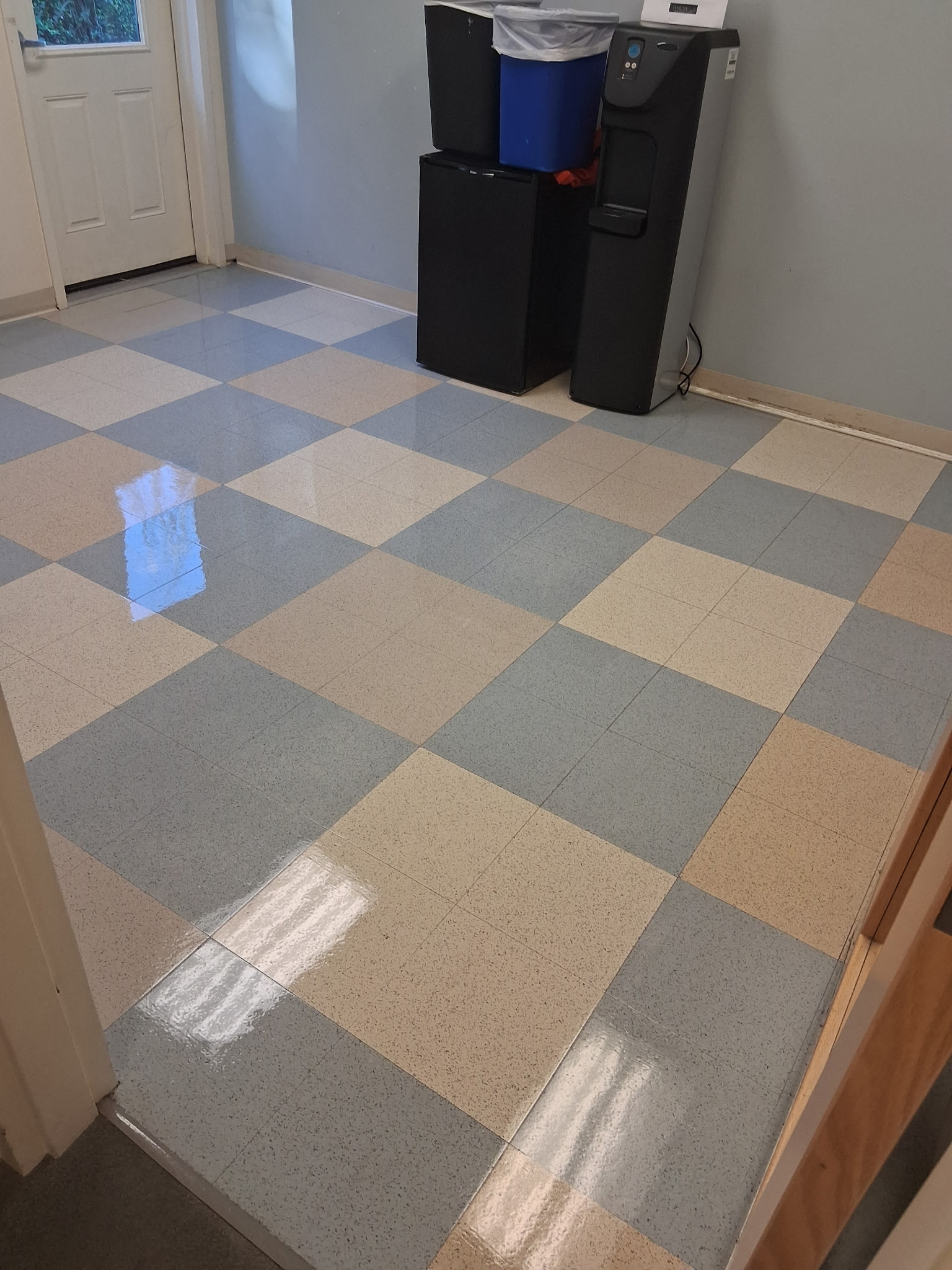
With Luxury Vinyl Tile (LVT) — often the modern “fake wood” or “wood-look vinyl plank/tile” f looring — the biggest problem is usually a stubborn film that makes the floor look permanently smeared under the lights. LVT is durable, but winter residue shows easily, especially in lobbies, entrances, and main walk paths. Once that residue builds up, it grabs onto more dirt and the f loor starts re-soiling quickly, making it feel like it’s never truly clean.

Carpeted areas have their own winter issue: salt doesn’t just sit on top. It works down into the f ibers, dries stiff, and attracts moisture, which is why entry carpets often develop “traffic lanes” that come back even after vacuuming. If salt gets embedded, it can take the right treatment and periodic deep cleaning to fully remove it instead of just masking it.
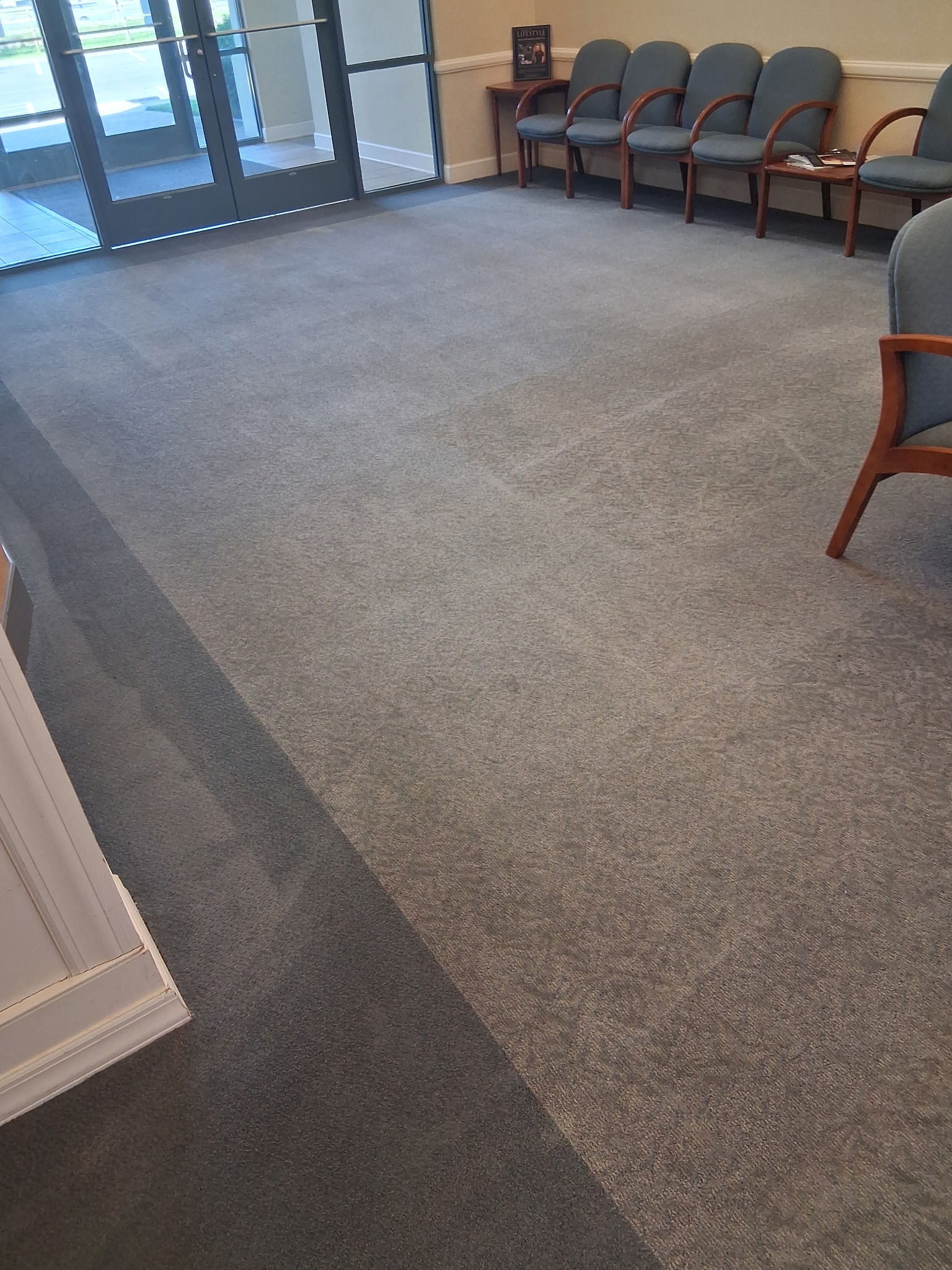
There’s also the customer perception factor — and it matters. Floors are one of the first things people notice when they walk into a building. Winter haze, white salt outlines, and dull traffic lanes make a space feel neglected, even if everything else is spotless. Clean, clear, streak-free f loors send the opposite message: professional, cared-for, and safe.
The difference between floors that look great all winter and floors that look beat up by February usually comes down to one thing: whether the cleaning crew is actually removing ice melt residue, or just spreading it around. Winter cleaning isn’t just “mop more.” It requires the right chemistry to break down and lift ice melt, and the right process to leave floors clean, streakfree, and haze-free.
If your floors get cloudy, streaky, or dull every winter, it’s not unavoidable — it’s fixable. South Jersey Building Services helps facilities prevent ice melt buildup before it damages finished tile, dulls wood-look vinyl floors, or stains entry carpets. If you want your facility looking sharp through the toughest months of the year, reach out to schedule a walkthrough and we’ll recommend a winter floor-care plan that actually works.